| OCR Text |
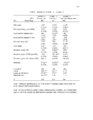
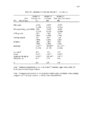
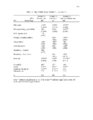
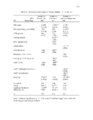
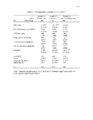
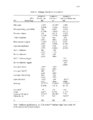
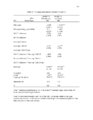
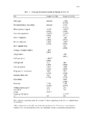
Show 114 both of which are independent variables. In looking at the regression results, however, where it is testing one factor against the dependent variable while holding the rest constant, it may not be accurately revealing the relationship. It may be indicating that socioeconomic conditions impact seat distribution when, in fact, other variables played a larger role. Incorporating interactions specifically between institutional and socioeconomic factors is a point to consider for future research. Strategy Cluster The strategic cluster of variables (Hypotheses 16-18, 20-22) and their interaction terms (Hypothesis 19) recognizes parties as actors who can shape and be shaped by their own decisions and other parties. The strategic explanation has been the most underdeveloped of the three variable clusters and it is an oversight this project rectifies. It is from this cluster that the percent of vote dependent variable sees some statistically significant coefficients while, at the same time, these independent variables are largely unable to explain the variation in the "nicheness" of mainstream parties' platform dependent variable. One of the independent variables that is statistically significant with the percent of vote dependent variable is the presence of a rival or splinter party, which was also noted in the bivariate correlations. In instances where there is a rival or splinter party competing in elections, the niche party's percent of the vote will decrease by 1.5 percent. While the direction is as hypothesized (H22), the unstandardized regression coefficient is smaller than expected. One would except a rival to take a larger percentage of the vote, although 1.5 percent of the vote could be the difference between passing the electoral |