| OCR Text |
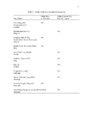
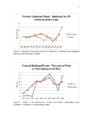
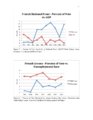
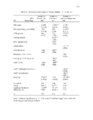
Show 110 .23 percent holding all else constant. According to this, it would take just over a four percent EP increase to raise the national percent by one, so while this is not an easy way to boost national success for niche parties, it can pay small dividends to run in both European and national elections. The interplay between national and supranational politics came out in Der Spiegel's June 2014 interview with Marine Le Pen, the leader for the French National Front (FN), an MCCP niche. Mathieu von Rohr asked, "In truth, though, you didn't win the elections because of the EU, but because the French are furious with their economic situation and with President François Hollande. Have you thanked him?" Le Pen responded, "No. Then I would have had to call Nicolas Sarkozy as well. France is in this situation because the conservative Union for a Popular Movement [Sarkozy's party] and the Socialists [Hollande's party] submitted to European treaties. These treaties promote German interests quite well, but they are poor at defending France's interests." Le Pen goes on to discuss how the FN's success in European Parliament elections ties into longterm goals of the party. "If you look at the polls you'll notice that we have at least as many potential voters among non-voters as we do among voters. I have said, and I believe that we will, come to power within the next 10 years. It may even happen faster than some can imagine" (von Rohr 2014). In the case of the 2014 European Parliament election, the FN was able to combine dissatisfaction with mainstream parties on economic policy to its niche area of wanting out of the Schengen free-movement zone, a European policy, because, as Marine Le Pen explains, "We have millions of unemployed and cannot afford any more immigration. Where are they supposed to live? It is not viable" (von Rohr 2014). The FN has been able to use its success at the supranational |