| OCR Text |
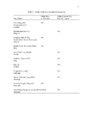
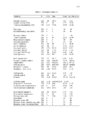
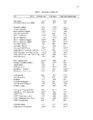
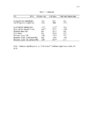
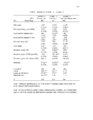
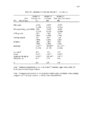
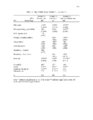
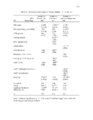
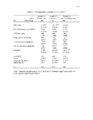
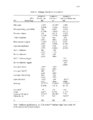
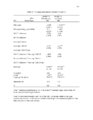
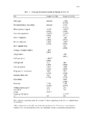
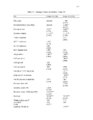
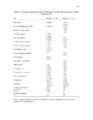
Show 109 First, the series of dichotomous variables to indicate the type of electoral system a country has is statistically significant with the number of seats dependent variable. This significant relationship was anticipated since electoral systems are used to determine how the percent of votes received are translated into seats in the legislature. However, the signs are slightly unexpected. While, as hypothesized in H1, the single-member district electoral system is expected to penalize smaller parties, like niche parties, the proportional representation systems should be more favorable for niche party success. The unstandardized regression coefficients reveal a negative relationship for both, just as the results of the bivariate correlations also indicated. While niche parties suffer less with seat allocation in a PR system (-9 seats) compared to a SMD type system (-26 seats), which is a notable difference in seats, and thus representation, neither system is especially conducive to niche party success. The unexpected sign for PR electoral systems could be from the legal electoral thresholds, often up to five percent, that could be still be keeping niche and small parties from easily gaining representation, but it should be noted that the threshold IV is not statistically significant. Secondly, the institutional feature that does seem to have a positive effect on niche party success (percent of vote and seats) is the state structure represented as prior success in European Parliament, second-order, elections. This also echoes the findings of the bivariate correlations. As hypothesized (H4) and seen with the case of the French environmental niche EELV presented in Chapter II, success and experience at the supranational level is positively impacting national elections. To illustrate, for every one percent increase in the votes a niche party received in the prior EP election, the percent of vote a niche party receives in the national legislative election increases by approximately |