| OCR Text |
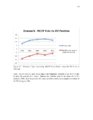
Show 67 Next is Denmark where, (from just after the 2001 election up to the 2011 election) the Danish People's Party (DF) has had a decade-long track record of playing a supporting role in a governing coalition (de Lange 2008, 68-9). As de Lange explains, An extensive agreement was negotiated, which formalized the status of the DF as a support party…. The party also secured considerable policy concessions, most notably in the field of immigration. From 2001 to 2005 the DF conscientiously lived up to the agreement, and when the 2005 elections confirmed support for the government coalition, the agreement was renewed. (2008, 69) This MCCP seems to be the rare case that was able to strike the right balance and sustained, even grew (it experienced its first decline in 2011), electorally during this time. While outside the scope of this project, it is worth noting that despite a strong recovery in the 2015 election (DF received 12% in 2011 and 21% in 2015), the DF opted to stay out of the governing coalition, which begs the question: why opt out when previous participation appears to have aided the party (Pederson 2015; Strange 2015)? From these cases, it is clear that there is still much to research and learn about how this strategic factor impacts the success of niche parties. Interesting enough, aspects of these cases challenge existing research, like de Lange who suggested both that "radical right-wing populist parties have rarely voluntarily left government coalitions" and that these parties "rarely, if ever, declined offers to participate in government coalitions" (2008, 82). The PVV did the former and the DF did the latter. Electoral Alliances Another strategic decision niche parties must make is whether or not to run in an election as an individual party or as part of a broader electoral alliance, also called preelectoral coalitions (PECs) in the literature (Debus 2009; Golder 2006; Ibenskas 2015 |