| OCR Text |
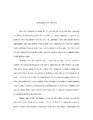
Show 18 Richardson 2015, 99). Due to its origins, the FPO did not satisfy my criteria for inclusion. Its breakaway party from 2005, however, did. The office-seeking wing of the Freedom Party (FPO) broke away in 2005 to form the Alliance for the Future of Austria (BZO). Initially, the BZO had the same platform, focused on immigration and law and order, as FPO but was more willing to cooperate, offer constructive ideas, and take on the responsibility of governing (Fallend 2006, 4-5). With the death of the first BZO chairman, Jörg Haider, in 2008, the new party leader, Josef Bucher, re-branded the party along the lines of a more typical conservative party, cutting the anti-immigrant rhetoric and promoting a platform rooted in limited government and the free market (The Press 2009). This is a case that started as a niche and later adopted a broader, more traditional, election program. It is not counted as part of the radical right party family, and would have been excluded if I relied on party family classifications alone. The environmental and MCCP niche parties included in this project have been thoroughly vetted by tracing their origins. This additional step, rather than simply relying on party families, will enhance the validity of the project. With this complete, attention can be turned to how the strategies and electoral fortunes of these niche parties have varied over time and between states. What Comprises "Electoral Fortunes"? The dependent variable for this project is "electoral fortunes," but how is this defined? I will utilize a two-dimensional definition of electoral fortunes that are represented by three possible dependent variables. The first dimension, extent of electoral success, focuses on electoral outcomes and is reflected in two measures: (1) the |