| OCR Text |
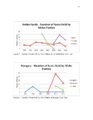
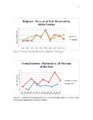
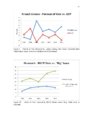
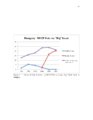
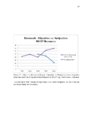
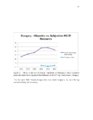
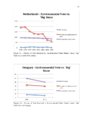
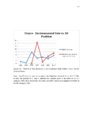
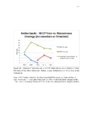
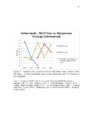
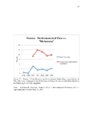
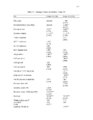
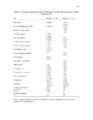
Show 34 Hypothesis 2: As the legal or effective threshold increases, niche parties will experience lower levels of electoral success (smaller percentage of votes received, fewer number of seats, and less movement by mainstream parties on niche issues). Like electoral systems, it should be noted that the thresholds are predominately constant over time, which means that while they are useful for comparing across countries, they will likely be unable to explain variation within countries. Along those lines, in looking at the countries considered here, the Netherlands has the lowest threshold where a party must receive 0.67 percent of the total valid votes to ensure a seat, and Hungary has the highest with a 5 percent legal threshold. The mean across all observations included in this project is a threshold of 3.34 percent. One would expect to see niche parties holding more legislative seats in countries, like the Netherlands, with lower thresholds. In looking at Figures 1 and 2, this supposition seems to hold. There is only one instance in the Netherlands, for List Pim Fortuyn (LPF) in 2006, where a niche party failed to acquire any seats. Most Dutch niche parties regularly acquire five or more seats. This is in contrast to the Hungarian niche parties, where failing to acquire any seats is a much more frequent occurrence. The Hungarian Justice and Life Party (MIEP), for example, in only one instance, in 1998, actually passed the threshold and secured representation. While there does seem to be a noticeable difference between states, as mentioned, the electoral threshold cannot explain why some niche parties within the same state consistently get around 10 seats while others double that, as seen in the Netherlands. One final note should be mentioned, a sort of correlated hypothesis for both the type of electoral system and electoral threshold. I expect these institutional variables to explain more of the variation in one of the dependent variables: the number of seats |