| OCR Text |
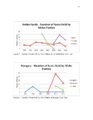
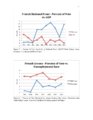
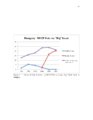
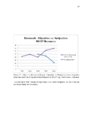
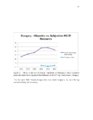
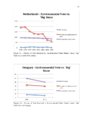
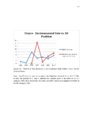
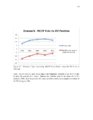
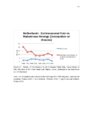
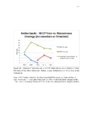
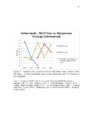
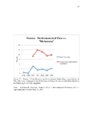
Show 37 how much to other factors. Federal states are a minority in the European Union. However, since 1979 there is a new dimension of competition available to all political parties within EU member states, which is to compete above the state at the supranational level in elections for the European Parliament. Elections for the European Parliament, like sub-national elections, are also considered second-order elections (Reif and Schmitt 1980; Reif et al. 1997). Supranational electoral success is an opportunity to build a support network, gain experience, and establish a reputation that could in turn influence how well a niche party does in subsequent national elections (de Vries 2007; Hix and Marsh 2005; Thorlakson 2005). The supranational level could prove especially useful to parties competing in unitary states as it emulates the opportunities offered in a federal system. In summary, incorporating factors that reveal the opportunities for, or success from, second-order elections will provide insight into how these relate to electoral fortunes at the national level and also come with the added bonus of varying more than electoral systems or thresholds. Hypothesis 4: As the percent of votes and number of seats received by niche parties in European Parliament elections increases, the electoral success (percent of the vote, number of seats, and movement by mainstream parties on niche issues) of niche parties in national elections will also increase. In looking at France, the environmental niche, Europe Ecology-The Greens (EELV), seems to follow the expected pattern (Figure 4) where an increase or decrease in the percent received in the European Parliament elections coincides with corresponding increases or decreases in the next national election, almost like the EP elections are a bellwether for the national elections. This does not hold true for the MCCP niche, the National Front, where there is more like an inverse relationship at times (see Figure 5) - |