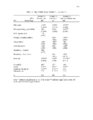
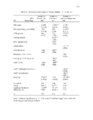
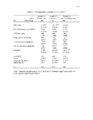
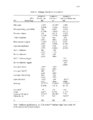
| OCR Text |
Show 35 received by a niche party in the national, lower level, legislative house. Given that these two institutional features are central to how votes are translated into seats, it is logical to assume these will impact the number of seats more than the other dependent variables. State Structure The final institutional variable is the structure of states, which looks at whether states are unitary or federal and also examines the role of the supranational level via the European Union (EU) (Jensen and Spoon 2010; Kestila and Soderlund 2007; Lubbers and Scheepers 2000; Lubbers and Scheepers 2002; Lubbers et al. 2002; Mayer 2002). The purpose of looking at multiple points of entry and competition is to determine how opportunities at these other levels, and the corresponding second-order elections, may impact the national electoral fortunes of niche parties. Most scholars suggest that a federal system, where power is shared between multiple levels of government, is often more conducive to the success of smaller parties like niches than a unitary system (Harmel and Robertson 1985; Thorlakson 2005; Willey 1998). The advantage of federal systems comes from the larger number of elected positions that exist across the levels of government, which increase the opportunities for parties to gain political office. Sub-national elections offer a way for parties to become known to the public and build a base of support that could then launch a niche party from a sub-national to national level. Unitary systems, in contrast, restrict party competition to the national level, and thus niche parties that are virtually unknown or untested in office are likely to face greater obstacles running in national elections. Additionally, the electoral system combined with the state structure may serve to create a significant |