| OCR Text |
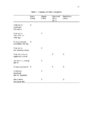
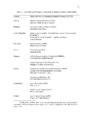
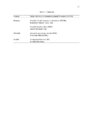
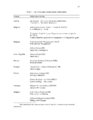
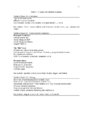
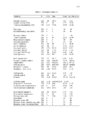
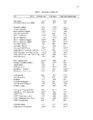
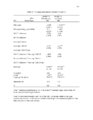
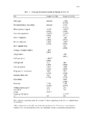
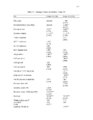
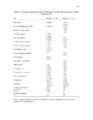
Show 17 parties differs significantly from their radical right party lists. Several high profile radical right parties satisfied my first criteria, being created as a niche party, but failed the second criteria of being created around the MCCP niche. For example, Italy's Northern League (LN) and Belgium's Flemish Interest (VB) were excluded because their origins were rooted in the ethno-territorial niche focused on center-periphery issues. In the case of the VB, for example, the party's origins were around Flemish independence, and immigration was not added as a party issue until almost a decade into its existence (Mudde 2003, 8788; Laible 2008, 68). Likewise, others were excluded because their origins were based on an economic niche. This was true of Denmark's Progress Party (Frp), Sweden's New Democracy (NyD), and Party X in Poland. To illustrate, founded in 1972, the Progress Party's main issue was the abolition of all income tax until there was a sharp rise in the number of asylum seekers in the early 1980s. At that point, the party and its leader, Gilstrup, starting making highly provocative statements about immigrants, which, in turn, lead to xenophobia being a core feature of the party (Andersen 2003, 2-3). These parties illustrate the downside to relying on party family classifications alone. To do so ignores the origin and evolution of these parties that, in the future, do deserve study as niche parties, but within their relevant niche of origin. Presenting a slightly different situation is Austria. The Freedom Party (FPO) is almost always counted amongst the radical right, for the sharp right turn the party took in 1986 under Jörg Haider's leadership. However, the origin of the party dates back to the 1950s and the desire to create a viable alternative to the two mainstream parties (Meret 2010, 186). Internally, during these early years, the FPO had two competing factions- one liberal and supportive of the free market and one pan-German nationalist (Wodak and |