| OCR Text |
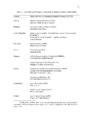
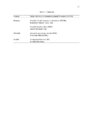
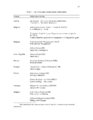
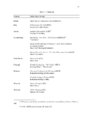
Show 14 How to Identify a Niche Party The other crucial debate around niche parties, the operational stage, involves how to identify the appropriate parties. While most agree that identification should be based on the party's primary issue position or policy profile, most end up relying on classifications based on party families, like radical right, green, Christian Democrat, or Socialist. Classification into a party family can be the result of self-identification by a party, as well as expert survey data placing parties on a left-right scale, and works by key authors on parties or countries (Art 2011; Bischof 2015, 4; de Lange 2008; Meguid 2008, 43-44; Meyer and Miller 2015, 261-262; Miodownik and Cartrite 2006, 3; Mudde 2005; Mudde 2007, 13-15). While the two closest party families for the niches under examination in this project are the green party family for the environmental niche and the radical right party family for the MCCP niche, the use of party families as the sole identifying factor is problematic for two reasons. First of all, many parties are identified as being part of a party family based on their more recent campaigns, party programs, and elections. If a national party, for example, is a current member of the European Green Party, this does not reveal if the party has always had an environmental focus or if the party shifted to prioritize this issue later on. In other words, there is no history or background on the origins of a party revealed by looking at the party family, which could mistakenly lead to a party being labeled a niche when it really is not. Secondly, especially amongst those labeled radical right, the party family is problematic because authors and experts classify parties differently. A key debate seen among those studying the radical right parties in West European states is over moral positions. For example, the Dutch List Pim Fortuyn (LPF) |