| OCR Text |
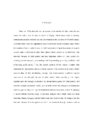
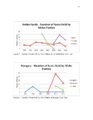
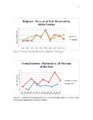
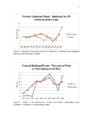
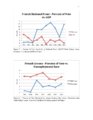
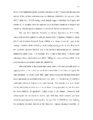
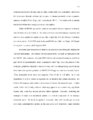
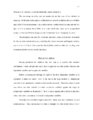
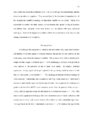
Show 48 parties should benefit from periods of economic decline punctuated with relatively high unemployment. As Inglehart explains, "Materialists are almost three times as likely as the Postmaterialists to favor employment discrimination favoring the native-born over foreigners, and six times as likely to say they would not want to have foreigners as neighbors" (1997, 247-8). Conversely, in periods of economic prosperity and security, it should be more difficult for these niche parties to persuasively blame immigrants and minorities for economic ills, real or perceived, and garner voter support to push for policy change. In particular, the economic threats and relative deprivation, real or perceived, brought on by the economic downturn starting in 2008 will serve as a suitable and timely test to Inglehart's thesis. Essentially, the postmaterialism premise conditions support for niche parties on external conditions or the perception of them. As a result, the economic and "big" issue variables (Hypotheses 5-9) will also be used to test Inglehart's thesis and its application to niche parties. For example, if findings reveal that MCCP niche parties achieve greater electoral success when conditions threaten material security and that environmental parties achieve greater electoral success when conditions promote material security, then this would offer additional evidence in support of Inglehart's thesis or vice versa. Secondly, the cleavage between materialists and postmaterialists has also been portrayed, by other authors, as a cleavage between globalization and/or EU integration ‘winners' and ‘losers' (Kriesi et al. 2006; Meunier 2004; Taggart 1998). According to de Vreese and Boomgaarden, those who favor postmaterialist values are more supportive of European integration (2005, 61). More specifically, they find that reluctance about integration is a function of perceived threats posed by outsiders (whether immigrants or |