| OCR Text |
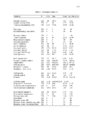
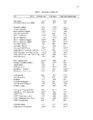
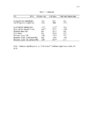
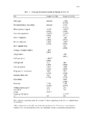
Show 29 (France, Denmark, the Netherlands, and Hungary), the hypotheses, and finally, mentions of explanatory strengths and limitations. See Table 5 for a summary of explanations, clusters, and variables. Throughout this chapter, I build the case that none of these explanations alone are able to adequately account for the variation in niche party electoral success. Rather, I suggest an empirically testable model, the strategic interaction model, which incorporates how institutional features and socioeconomic conditions provide the context in which the strategies employed by both mainstream and niche parties play out. Variable Cluster #1-Institutions The first set of explanations focus on institutions. Institutions are generally described as the rules of the game that constrain or facilitate opportunities for electoral success, and should affect all niche parties in a similar fashion, regardless of their central issues (Abedi 2002; Carter 2004; Ezrow 2010; Golder 2003; Jackman and Volpert 1996; Meguid 2005; Veugelers and Magnan 2005). In other words, institutional effects are nondiscerning and non-discriminatory rules. Golder echoes this point in stating, I have proposed that electoral systems create coordination problems for extreme right parties. In fact, any small party that seeks to exert influence in a political system faces such problems. In this regard, the electoral system does not create special problems for extreme right parties. (2003, 461-62) The variables included in the electoral institutions cluster include: the type of electoral system, electoral thresholds, and state structures (unitary or federal) including the role of the supranational (EU) level. |