| OCR Text |
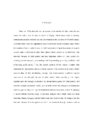
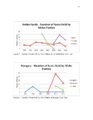
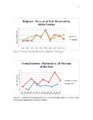
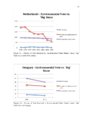
Show 66 She goes on to argue that few parties are successfully able to strike a balance between these approaches. Moreover, this paradox is not limited to the MCCP niche. As was the case with France's Europe Ecology-The Greens discussed in the previous section, the coalition experience of the EELV, seen as a pushover on its key issue during its tenure in government, seems to have been a detriment to the future electoral success of the niche party (Boy 2002; Rüdig 2001). Given the difficulty niche parties face, I expect, and my hypothesis reflects this, that coalition experience will, more often than not, hinder rather than help niche parties in future elections. Hypothesis 20: The entry of a niche party into a coalition with mainstream parties will decrease the electoral success (percent of the vote, number of seats, and movement by mainstream parties on niche issues) of the niche party in future elections. To explore this strategic factor more, the cases of the Netherlands and Denmark, where the MCCP niche supported the governing coalitions, will be briefly considered. First off, the Dutch Party for Freedom (PVV) was the third largest party following the 2010 election and it agreed to support the minority government led by the Liberal Party (VVD) (The Telegraph 2010). While the PVV had no cabinet positions in the government, its support was necessary for policy to pass. The PVV, in taking a hard line on budget and austerity measures, caused the coalition to collapse and this triggered new elections (British Broadcasting Corporation 2012; van Kessel 2013, 182-3). The PVV took a significant hit, in terms of the percent of the vote it received in the 2012 election. It fell from 15.5 percent of the vote in 2010 to 10.1 percent of the vote in 2012. Many speculated that the PVV was being punished for bringing down the governing coalition both by voters and the loud criticisms expressed by the mainstream parties, including its former coalition partners (van Kessel and Hollander 2012). |