| OCR Text |
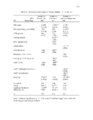
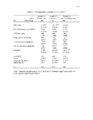
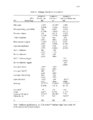
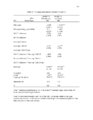
Show 106 aspects of variation and have different strengths and weaknesses. First of all, fixed effects (FE) focuses on within-unit variation, such as explaining the variations of success within the French National Front over time, whereas random effects (RE) looks at between-unit variation, like explaining variation between the French National Front and Danish People's Party. Both within and between models shed light on the electoral fortunes of niche parties and deserve to be included. Another difference is that with FE one cannot generalize findings from the sample to a larger population like one can with RE. FE generalizes to potential future time points of the individual case, like the French National Front, while RE can make inferences from my sample of MCCP and environmental niche parties to a broader population of niche parties. Thirdly, a strength of the FE model is that it better handles any omitted variable bias, but a weakness is that FE drops all time invariant variables, including many of my dichotomous variables like the one for niche party type and EU membership. This weakness is not only for timeinvariant variables, but also slow-changing variables. If a variable changes over time, but slowly, the fixed effects will make it hard for such variables to appear substantively or statistically significant (Beck and Katz 2001). The strengths of the FE model are weaknesses for RE and vice versa. While I have opted to examine both FE and RE models, how do I know these effects occur in my models? There are tests to determine if within (FE) and between (RE) effects are present in models, providing a certain level of confidence. For fixed effects models, the F-test is used and if it is statistically significant, the null hypothesis that no fixed effects are present can be rejected. For random effects models, the BreuschPagan Lagrange Multiplier, presented as a chi-squared test, is used and the same scenario |