| OCR Text |
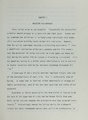
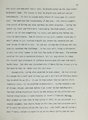
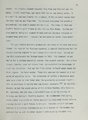
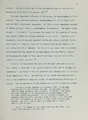
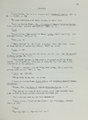
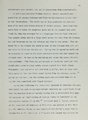
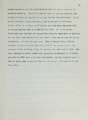
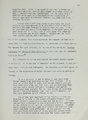
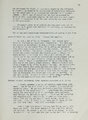
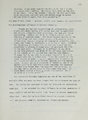
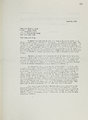
Show 209 Comments of the Referee on "The Activated Complex in Chemical Reaction," by Henry Eyring, J. Chem. Phys. Vol. 3, No. 2, (T935), p. l07. . I enclose the paper by Dr. in Chemical Reactions." I have problems involved, and although that the method of treatment is Eyring entitled "The Activated Complex given considerable thought to the I have nevertheless become convinced unsound and the result incorrect. ‘ My suspicions were aroused by the paragraph at the Eop of page 7 which points out that the kinetic theory cross section 0 of the cus- tomary crude picture is replaced in this theory by a factor hZ/ankT in the partition function ratio, originating in the transformation of two translational degrees of freedom to vibrationg in the collision complex. This factor is about lO'] cm2, as is o , but the agreement seems purely accidental. Since Eyring's treatment is really only a mathematical device to arrive more easily at the results of a kinetic treatment (quantum mechanical phenomena play no role in the theory and it is thus unobjectionable in principle to trace details of the reaction process), I am not very happy with this lack of correspondence in the two theories. Thus, if one may be permitted to imagine a condition where all charggs were increased ten-fold, the factor 02 would be reduced to IO'ZO cm , but Eyring would calculate rates with the same constant factor as before, and hence 100 times larger than are allowed, for it is hard to see how the simple kinetic expression Ze‘E/RT with an ordinary kinetic theory (i.e., viscosity) value of Z can be excaped as an upper limit for the reaction rate. I believe that the difficulty comes in at the very beginning. I doubt the statement "The activated state is always a saddle point with positive (or zero) curvature in all degrees of freedom except one." Incidentally, Eyring must strike out his parenthetical exception to support his calculations, since zero curvature would be treated as translation; this is beside the point, however. I do not recall that any complete potential surfaces have ever been calculated. For three hydrogen atoms on a straight line, with distances X] and X between adjacent atoms, the quasi-normal coordinates are X + X2 and X - X2, and are associated with a minimum and a maximum energy, respectively. I advance the opinion that if one now moves either of the two end atoms perpendicular to the original common line, the potential energy will decrease, and that there are thus three translational degrees of freedom in the collision complex. This raises two questions. First, what will happen if the Eyring treatment is applied to this model? I think the answer is that all the translations, rotations and vibrations will pair off and approximately cancel out, and that a recognizable 02 will be put into the theory by requiring all three translational distances to be small at the same time. The second question is how Eyring has managed to calculate rates of the right order of magnitude in spite of the falsely low entropy of his collision complexes. The answer to this I believe will be found to be associated with the fact that he assumes a large attractive potential molecular axis is in a suitable range even though the atom |