| OCR Text |
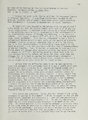
Show 106 biological systems together and having them published in book form. Their research association continued after Eyring's departure from Princeton and when Johnson was able to come to Utah for the l950-5l school year, they set out in earnest to have their project realized. In addition to further research together, they did most of the writing of the book that year. To complement their work on luminescence and the effects of temperature, pressure and inhibitors on biological systems, they also included the work of Milton J. Polissar and associates47 on nerve conduction and diffusion through cell membranes. Even though most of the collaboration with Polissar was done by mail, the manuscript of the book was completed in the fall of l952. The book, Eyring's third, was published in early l954 under the title, The Kinetic Basis of Molecular Biology, by John Wiley and Sons Book Company with Johnson and Polissar as co-authors. The purpose of the book was "to apply modern molecular theory, in so far as it is now possible, to some representative biological processes."48 The first part of the book dealt with the explanation of Eyring's absolute rate theory, then subsequent chapters illustrated the applicability of the theory to biological systems. The book met with considerable success and by the end of l954, plans were made to have the work translated into Japanese.49 It has since become one of Eyring's most often cited works.50 The book was a culmination of Eyring's work at Princeton and his early work in the field at Utah, but it was just a beginning of his investigations into the chemistry of biological systems. Even before the publication of the book, he and his co-workers and looked at the complicated process of photo-synthesis in the light of absolute rate theory |