| OCR Text |
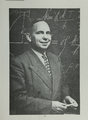
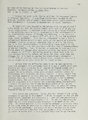
Show lOO Except for the great scientific stimulation, what can we learn from Henry the Great? Is it perhaps that, when you are born a genius, a fastidious clean and hardy life pays great dividends, whether you are a Mormon, a Catholic, a Jew or an atheist? He walks to work and back four times a day (l0 miles total) and, when nobody is looking, he runs. In fact, he challenged everybody he met here to a fifty-yard dash, and had only one half-hearted taker in Bob Sears, although, unfortunatggy, there was no time to stage the sprint of the century. Eyring's second trip in June, l957, was a five day stay at Oakridge where he participated on a special panel on "corrosion." On July 1, he flew to Socorro, New Mexico where he delivered the commencement address at the New Mexico Institute of Mining and Technology. He has given many such addresses dating back to his days on the Princeton faculty when he was invited to give the commencement address to the University of Washington in St. Louis. They asked for a copy of the address so it could be printed, but Eyring, who seldom wrote out a talk or speech, had none. To comply with their request, the night before the commence- ment, he stayed up all of the night and wrote out the discourse he gave the next morning. Sometime in May, June or July, most often July, Eyring would host his annual footrace with his graduate students. At Princeton, he fre- quently challenged them and others to footraces and standing broadjump contests. This was background to the beginning of an interesting tra- dition for him at Utah. In 1957, the tradition had not begun, but the first of these famous races was held in July l958. This well publicized event came about when Eyring challenged his secretary, Belva Barlow, to a footrace. Miss Barlow, at first, ignored the challenge, but he insisted and set a date for the race. Miss Barlow came prepared with pedal pushers and running shoes and well expected to win the race. She later |