| OCR Text |
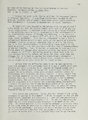
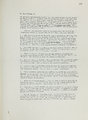
Show 36 In addition he took a course in Elementary German because he had already planned to stay only one more year at Arizona, then go on and do graduate work in chemistry where the additional chemistry and the foreign language were both necessary.6 At Arizona, the ability of the young instructor of chemistry was recognized by his associates and they encouraged him to continue his studies in chemistry. In the fall of l924, Professors Buehrer and Roberts each recommended Eyring for fellowships to study chemistry at the University of California at Berkeley and the University of Chicago, respectively. Apparently both schools were impressed with the recommen- dations and the credentials of Eyring, for both offered good fellowships, ' Chicago for $650 and Berkeley for $700.7 Eyring chose to go to Berkeley and after a summer visit at Pima, he set out for California in early August 1925. At Berkeley, Eyring came under the influence of the famed chemist, Gilbert N. Lewis and his staff. Lewis, educated at Harvard, was one of the pioneers of modern physical chemistry. He set forth the idea that the chemical bond is formed by the mutual sharing of two electrons between two atoms. His book, Valence and the Structure of Atoms and Molecules (l923), outlining this work, is a classic in the history of chemistry. 0f even greater significance in stimulating research in physical chemistry was his and Merle Randall's Thermodynamics and the Free Energy of Chemical Substances (l923). One prominent chemist has said that "this book probably has had more influence on the development of physical chemistry than any other single publication."8 Eyring recalls that in the G. N. Lewis Laboratory "there was no 9 place for scientific onlookers." The emphasis was on research. In |