| OCR Text |
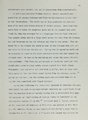
Show 145 do anything."40 This optimism has been a part of Eyring's nature throughout his life. One associate and friend recalled his first en- counter with Eyring this way: My first meeting with Henry Eyring occurred at Princeton University while I was a graduate student at Harvard. I had made a trip to Princeton to attend a seminar being given by one of my former teachers and was graciously invited to join some of the faculty and the speaker at dinner and discussion in the Graduate House after the seminar. I recall how impressed I was to be sitting at dinner between Dr. (later Sir) Hugh Taylor and Dr. Henry Eyring. I was fascinated with the wit, charm, and scientific acumen of Henry Eyring. After dinner we sat about and discussed scientific questions, largely arising from the seminar. In the course of this discussion Henry made the comment, 'Give me some paper and pencils and I'll give you an answer to any question you pose. It may not mean anything much, it may even be wrong, but I'll give you an answer.1 I was greatly intrigued by this statement. To me it indicated Henry Eyring's interest in all matters of science, his confidence, yet humbleness, in his own capability, and a delightffll sense of humor which permitted him to poke fun at himself. So that such questions could be addressed, Eyring assured that there was freedom in his laboratories to explore and question any scientific results. Perhaps the major reason for his ability to solve problems has been his remarkable mathematical ability. For Eyring, there is always a simple mathematical model to explain scientific experiments. Once a working model is established, then everything can be calculated, even the "blue of the sky."42 When a student brings his experimental data and his ideas on what it might mean and the problems it presents, Eyring looks for a model to explain the phenomena. If it does not come quickly, his mind becomes obsessed with the problem until it makes some sense. Part of his ability to conceive models and his deep insight into the nature of things comes because Eyring talks with molecules. cules are, almost in a literal sense, his friends. Walter Moore Mole- |