| OCR Text |
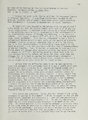
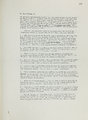
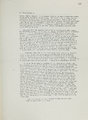
Show 38 activity is also historically interesting in that he was the first student to do work in atomic chemistry at Berkeley. one of the great centers of Later Berkeley became radiochemistry in the world and would pro- duce scientists like Nobel laureate Glenn Seaborg, who also did his doctoral work under Gibson. So with Eyring, Berkeley began its research into radiochemistry.14 It is interesting that Eyring's final preliminary examination lasted for about ten minutes. Professor Wendell Latimer, who conducted the exam, asked him which is the most reactive as an oxidizing agent, nitrous or nitric acid (HNOZ or HNO3) and which one is thermodynamically the most powerful? Eyring answered both questions satisfactorily and after a few more questions, Professor Latimer asked if anyone else desired to ask him any questions. quickly. There were none, so the exam was over Professor Latimer had decided Eyring was good before the exam - and didn't want to waste his and others time. The only slightly nega- tive feeling Eyring had for the doctoral program in chemistry at Berkeley came from the lack of what he felt was an adequate amount of course work for graduate students and from the preliminary examination which he thought could have been more searching. But despite this he found the experience at Berkeley delightful. When Eyring was not working in the laboratory during his typical 8 a.m. to lo p.m. day, six days a week, he was studying for or attending his mathematics classes. At Berkeley, Ph D. candidates had to have a minor in a subject other than the major field, Eyring's minor was in mathematics. In fact, every semester he had one or two mathematics courses, including the summer session in l926. His mathematical studies there included such important topics as complex variables, special |