| OCR Text |
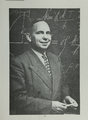
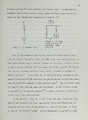
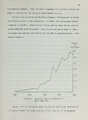
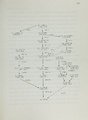
Show 73 the foundation, which was located in Washington, D.C., had placed nearly all its research facilities at the disposition of the government. It's acting director, Dr. Milton Harris, had accepted a position in the pri- vate sector, and the foundation's board of directors were looking for both an acting director and a new home. One of the foundation's basic objectives was to have a program of training and education at the graduate level. Nith this idea in mind, they approached President Harold W. Dodds at Princeton, and after consulting with Professor Taylor, the foundation decided to affiliate itself with Princeton.49 The choice of Eyring as acting director seems strange indeed, because he had no experience with textiles at all. He did not even know the basic terminology and extent of the foundation's work. But he took on the task like all of his problems with vigor, determination and extraordinary creativeness. textile research. In a very short time, Eyring became a leader in The activity with the Institute required 40% of his time and the remaining 60% was devoted to his regular work with the chemistry department. Aided by three other associates, Eyring had the responsibility each year of appointing fifteen research fellows who would work for their Ph.D. degrees on textile problems. The research and study of the physical properties of the fibers and fabrics and the effects of spinning, weaving, dyeing and stretching of textiles brought about a host of new problems for Eyring and his co- workers. Here again the Eyring absolute rate theory came to the rescue. With an ingenious idea of using modified springs and dash pots (see figures 3 and 4) they created mathematical models to describe the physical properties of textiles. To stretch a fabric, including pulling the fabric to pieces, requires a certain energy (activation enerQY). and the |