| OCR Text |
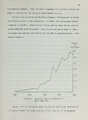
Show 108 nucleids. To explain the results of this research, Eyring and Stover developed a theory of mutations in which they were able to correlate with mathematical equations the probability of survival of a given individual as a function of time in a homogeneous population. Beginning in l970, they published the results of their collaboration in a series of papers entitled "The Dynamics of Life."55 They were led to the ele- mentary differential equation %% = -ks(l-s) where s is the probability of survival from which the solution 5 = l+exp-k(T-t) could be applied to mutation rates, death rates, cancer rates and a number of other situations. Eyring's absolute rate theory was basic in the interpreta- tion of the k in the formula. The constant T is the half-life; i.e. the age when half the population is mutated, dead, has cancer, etc. The ' V theory was also applied to non-homogeneous populations with homogeneous sub-populations and Eyring and Stover could write equations to describe this situation, too. The Eyring-Stover theory, surprisingly, can also be applied to such dynamic systems as autocatalysis, crystalization, corrosion of metals: aging and poisoning.56 Eyring's renewed interest in rate theory in biology and medicine led him to look into the mechanism of anesthesia. In cooperation with Dr. J. u. Woodbury, J. S. D'Arrigo, I. Ueda, and D. Shieh, Eyring further developed a theory of Johnson and Eyring of anesthesiology in which the enzymes necessary for biological functions are described as being un- folded when subjected to anethestics; the anesthetic combines with the hydrophobic regions of the enzymes. Knowing the proportions of enzymes in the less active or inactive form, the depth of anesthesia can be 57 calculated and, in fact, the theory can be quantitatively tested. The impact of this important work has stimulated numerous investigations by |