| OCR Text |
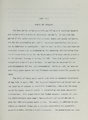
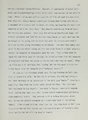
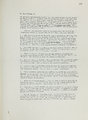
Show 42 greatest teachers of theoretical physics, had just recently returned from EurOpe fired up with the great possibilities and potential of the new quantum theory.20A'Eyring, with his good mathematics background, easily followed the subject. He would later become one of the pioneers in applying quantum mechanics to chemistry. Eyring, as he had at Berkeley, also took advantage of the visits of many scientists, including Paul Dirac, Werner Heisenberg, and Leon Brillonin, while he was at Wisconsin. To him, Madison was good in chemistry but not as good as Berkeley; only in its best fields did it rival his alma mater.21 In l928 the field of chemical kinetics offered a great challenge and opportunity for a physical chemist. It was a relatively young field of interest and there were many unanswered questions concerning the dynamics of chemical reactions. The first measurement of a reaction rate came in l850 when Ludwig Wilhelmly measured the rate of hydrolysis of sucrose in the presence of acids.22 His investigations showed that the concentration of sucrose decreased exponentially with time. Between 1864 and l869 two Norwegian scientists, C. M. Guldberg and Peter Naage, generalized this notion with the "law of mass action" which states that a chemical reaction is directly proportional to the products of the masses, each raised to some definite power. In l877, J. H. Van't Hoff independently discovered the "law of mass action" and subsequently did much to interest other chemists in the quantitative study of reaction rates. One of the most fruitful investigations came in l889 when Svante Arrhenius discovered that the rate of chemical reactions increases with temperature. Arrhenius' theory argued that before a molecule would react it must attain a certain activation energy. He then derived an |