| OCR Text |
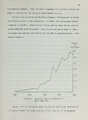
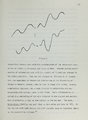
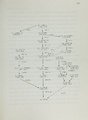
Show 46 using Heitler, London-Suguria theoretical calculations. This problem was circumvented using experimental results from spectroscopic measurements, plotting what is called a Morse curve, then using the results with the London formula. The procedure known as the "semi-empirical method" gave only an approximate potential surface, but still useful results.29 With a picture to look at, Eyring could see the mechanism of a chemical reaction. The result was a whole new world for studying reaction kinetics and Eyring became a confirmed kineticist. The picture of the reaction mechanism viewed as a potential surface is quite simple. (See Figures l and 2.) For three atoms, it is nothing more than a landscape, a surface with mountains and valleys. The valleys I correspond to stable compounds and the mountains to energy barriers. If enough energy is available one can go over a mountain pass into another valley and the reaction has taken place. With sufficient knowledge about the surface, the reaction rate can be calculated. For three atoms not in a line or for more atoms the surface is no longer three-dimensional, but a higher-dimensional surface and a little knowledge of higher-dimensional geometry allows one to visualize the reaction mechanism too. This unique picture of a chemical reaction did not immediately solve all the problems of reaction kinetics, but Eyring could see that pursuing the idea would bring rewarding results. He worked vigorously and continually on the difficult details during the next few years. The results of Eyring and Polanyi's work started reaction rate theory off in a completely new direction.30 The year in Berlin was not free of serious personal concerns. Shortly after his arrival in Germany, Eyring received word from his father that the U.S. State Department had ruled that his younger brother |