| OCR Text |
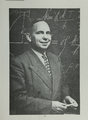
Show 129 the application of absolute rate theory to viscosity of liquids in 1936 and subsequent studies of flow properties. Eyring, in response, graciously thanked his many very able collaborators and forecast sig- nificant developments in the basic scientific understanding of the flow properties of matter.2 The third major award at Utah for Eyring's important contributions to chemistry came in 1951 when the New York Section of the American Chemical Society (ACS) presented him with their highest award, the William H. Nichols Medal. In addition to a banquet in his honor at the Hotel Statler in New York City, Eyring was the subject of the cover story for their local publication, The Indicator, and also for the ACS's national publication, Chemical and Engineering News.3 This was merely the first of many awards and honors he would receive from his colleagues and friends in the ACS. Eyring's association with the ACS began in 1924 as a student at Arizona. From that time on he played an increasingly active role, initially as a participant in its meetings and later as an officer and special advisor. From 1944 to 1946 he was secretary of the Society's Division of Physical Chemistry and in 1947 he became chairman of this division. During the early 1950's, he served as regional director of the society's Sixth District and later in the decade he served in several advisory positions: member Board Committee Advisory to the Chemical Corps (1956-62), member Advisory Board for "Chemical Monographs" (1960-62) and member Board Committee Advisory to "Continental Classroom--Modern Chemistry" (1959-60).4 He not only worked on the committee for "Continental Classroom," but was actively involved in the production of one of its programs, which were designed for the nations high school science teachers. In December 1959, he spent a few |