| OCR Text |
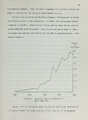
Show 84 In 1947, the year after Eyring's arriva1, Utah awarded its first two Ph.D. degrees. By 1961 forty-seven departments were offering masters degrees in 108 specia1ized areas and forty-one departments were offering doctors degrees in 86 specia1ized areas. During his twenty years as Dean of the Graduate Schoo1, 5275 advanced degrees were conferred of which 749 were doctors degrees. Enro11ment in the graduate schoo1 rose from 1ess than 100 in 1945 to over 2500 students by 1965. Nowhere was the growth more spectacu1ar than in the chemistry department. During Eyring‘s first ten years as Dean it had awarded fifty-two Ph.D.'s, just over twenty percent of the tota1 number (257) given by the University during that period. Eyring himse1f had directed the work of twenty-two of these fifty-two chemistry graduates.3 By 1980, he had directed 100 students, near1y a third of a11 the chemistry department's Ph.D.‘s.4 Much of the success and rapid growth of the graduate program can be attributed to Eyring's phi1osophy of administration. He had no desire to bui1d an empire, but saw to it that the authority to direct graduate studies went to the various departments. This permissiveness a11owed the departments to expand as rapid1y as they were ab1e to. The decen- tra1ization po1icy was apparent1y very successfu1, for during his twenty years as Dean, he received no comp1aints and was unaware of any major prob1ems. The c1osest thing to a prob1em was the desire of the Civi1 Engineering department to give the Ph.D. degree, even though they had no facu1ty with that degree. Eyring did not say they cou1d not offer the degree, but the Graduate Schoo1 required a minimum of five Ph.D.‘s on a degree candidate's committee. The department chairman understood Eyring's message and set out to improve the educationa1 training of his facu1ty. |