| OCR Text |
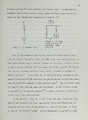
Show 32 "where it would do the most good." Eyring survived the temporary humil- iation of short hair and the wearing of his green cap without adversely affecting his success at Tucson, but with no added love for lynch law.1 Perhaps the only other unpleasant experience for Eyring at the University was taking the required four units of military training.2 Even though he disliked the rigor of military life, he and his classmates did gain some benefits from the course. There was a visit by General John J. Pershing to their campus military unit and the military training provided for physical exercise. In fact, Eyring was among the fastest two or three freshman students in running the hundred yard dash, a required military exercise. ‘ Eyring concentrated on science at the University. In addition to the required courses in his mining engineering program he took a lot of additional course work in physics, chemistry and mathematics. It was in mathematics that he excelled; of the l56 units of credits earned for his bachelors degree, twenty-nine were in mathematics. His marked interest in the subject led him to work with Professor Cressy department on his senior thesis. of the mathematics This work discussed the mathematics of the catenary curve and its application to the theory of the aerial tramway. At the time, if Eyring had seen a future in mathematics for him- self, he would have made it his major field of study. However, he still felt secure with the advice of his high school science teacher, Mr. Sessions, and continued with his mining studies, studies which he also enjoyed. It is interesting that chemistry did not appear to him as the field in which he would build a career. The subject was interesting to him, but not as exciting as engineering or mathematics. Eyring took only |