| OCR Text |
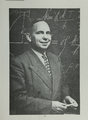
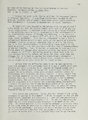
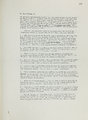
Show l3l foreign scholar to receive such an award in Korea. Since honorary de- grees were approved by the Korean education minister, it was considered a great honor to receive one. Eyring was held in great respect by the Korean scientific community. The principal behind the securing of such distinct honors for Eyring was Alexius T. Ree. Ree had first met Eyring at Princeton in l938 when he was there on a post-doctoral fellowship. Since that meeting, they have collaborated together on over seventy scientific papers. Ree returned to Japan, where he had received his doctorate, for the war year and when Korea was liberated in l945, he returned home. Eyring at Utah. In l948, he returned to the United States to study with Ree subsequently was hired on a permanent basis and served as professor of Chemistry at Utah until his retirement in l970.7 Professor Ree has been only one of Eyring's many Korean collaborators and students. Over the years he has directed the graduate work of over twenty Korean students and has shown continued interest in Korean chemistry. In l974, he was invited to Korea for a second time. On this visit he was given the honor of addressing the Korean National Academy of Sciences on the occasion of their twentieth anniversary and was granted an honorary membership in the Korean Chemical Society.8 After a week in Korea in l963, Eyring spent three weeks in Japan. On July 6, the Eyrings left Japan for Salt Lake City. They arrived home late on the evening of July 7, having circled the globe. leave a distinct impression upon Eyring. The trip did He had given thirty-seven scientific lectures in seven different foreign countries all in English and at none did the host consider it necessary to translate. With such an experience, throughout the remainder of his ACS presidency, he ad- vocated the adoption of English as a common scientific language.9 |