| OCR Text |
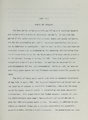
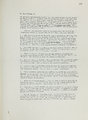
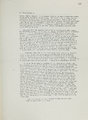
Show occupation of many early chemists. The family business did very well until Eyring's great grandfather Edward Christian Eyring (lBlO-l850) invested the family fortunes in a factory to produce an oak extract for 4 tanning leather. The business failed after considerable struggle and that failure changed the Eyring family's way of life. To worsen mat- ters Edward Christian Eyring died shortly after this catastrophe leaving three orphaned children, his wife having died six years before. His son, Henry Eyring (1835-l902), the grandfather of our subject, seeing no future in Germany, emigrated to the United States in l853 with one of his two sisters. He ended up in St. Louis where he found work with a wholesale drug firm. While he was in St. Louis, Henry Eyring attended a meeting of the Mormons, mostly out of curiosity, but the new religion impressed him deeply and in a few months he was baptized a member of the Mormon Church.5 Shortly afterward he was sent on a mission to preach Mormon- ism to the Indian tribes in what is now Oklahoma. After four and a half years of missionary work there, Eyring, inspired by a dream, made his way to Salt Lake City, the capital of Mormonism. His devotion to his new religion and his educational background, primarily from tutors, made him an important pioneer leader among the Mormons in Utah. By l863, three years after his arrival in Utah, he had been appointed Bishop of the St. George Second Ward.6 During the next forty years he established himself as a very successful merchant and an influential Mormon leader. His service to his Church, in addition to his bishopric, included a two-year mission to his native Germany (l874-76), service as a coun- selor in two stake presidencies, one in St. George, Utah (l87Z-1887) and |