| OCR Text |
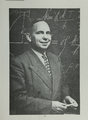
Show 188 not have made the contribution to science that he has made, yet without the early social environment he might never have had the desire or opportunity to work in science as he has done. Almost as significant it seems is the timing in Eyring's life. He seemed to have been at the right place at the right time at each stage of his life. His career was not by design on his part. He has never purposely outlined the direction he wanted it to take; things just happened. Had things not worked out in the world of physical chemistry, he felt perfectly secure in the thought that he could always go back to Pima, Arizona and farm. Fate or divine providence seem important in the explanation and timing of the moves to Arizona, Berkeley, Wisconsin, Berlin, Princeton, and Utah. As complex as his life seems, Eyring was a simple man with simple desires.' He avoided controversy in his science and in his religion, he was content with his work, and he wanted nothing but the best for those around him. ion. He could not be characterized as a devout student of relig- He was no theologian, but rather he had a simple faith. He was a great practicioner of his Christian ideals and the Mormon philosophy of the good life. He has been a happy man all his life and spread hap- piness wherever he went. For Eyring there was no irreconcilable conflict between science and religion. For him the gospel is the truth whether it comes from science or religion. In fact, Mormonism teaches that there is no separation of the temporal and the spiritual realms. Each man is a steward and must work out his own salvation in this world. ligious life from his everyday activities. as Gods creation. One cannot divide one's reMormon's also view the earth Hence they are favorably desposed to study it. |