| OCR Text |
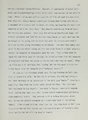
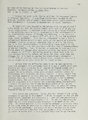
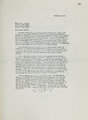
Show 48 breaking work of Eyring and Polanyi and was greatly impressed. He, in turn, strongly recommended to Professor G. N. Lewis that Berkeley should bring Eyring back for a year. Since Professor Joel Hildebrand was to take a leave of absence from Berkeley for study in Europe, the University of California offered a one year lectureship at Berkeley. He accepted the position over an offer for an appointment at the University of New Hampshire. In early August, l930, he and his wife returned to the United States. The atmosphere at Berkeley had not changed since his graduate school days four years before, but Eyring had. In addition to his firm grasp of thermodynamics and mathematics, Eyring now knew quantum mechanics, had B fine experimental experience and was determined to extend the work he had begun in Berlin. His light laboratory teaching load allowed him to spend substantial time on his quantum mechanical attack on reaction kinetics. During his one year stay at Berkeley, he spent most of his working hours on halogen-hydrogen reactions and the study paid off in some exciting ways. All the chemistry books and experiments to date said that when hydrogen and fluorine were put together in pure form there was an immediate explosion. plosions Early experimental work indicated that violent ex- occurred even when fluorine was placed in the presence of liquid hydrogen. Eyring‘s quantum mechanical calculations, however, indicated just the opposite. Hydrogen and fluorine would not react without considerable activation energy. In fact, the mathematics indi- cated that the reaction would not take place until temperatures of l50o to 250°C were obtained and that it was not possible for them to react at liquid hydrogen temperatures. Eyring, convinced his theoretical |