| OCR Text |
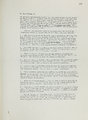
Show 60 ll thermodynamics. Eyring, with this formulation, could treat the transi- tion complex molecule (the state between reactants and products) and by calculating its properties determine the reaction rate. His absolute rate theory, as it is now called, has been one of the most potent ideas to appear in chemistry in the last fifty years, since it not only applies to chemical reactions but also to numerous physical and biological processes as well. Professor Hugh Taylor commented on Eyring's theory and its importance as he recalled the highlights of his fifty years in chemical kinetics. The golden decade of my life in Princeton was the period from l929 to l939. The Frick Chemical Laboratory was new and excellently equipped for the researches then underway. But the richness of the decade came from the presence of Eyring and his co-workers, exploring the new absolute rate theory of chemical rate processes, complementing the active experimental studies underway in the laboratories. It was the immense range of the absolute rate theory, applicable not only to atom- molecule and molecule-molecule reactions but alike to physical processes, conduction, transport number, viscosity, diffusion and biological processes of wide variety and scope. Eyring's absolute rate theory excited interest from places beside Princeton. His former colleague, Farrington Daniels at Wisconsin, com- mented in his book, Chemical Kinetics, concerning Eyring's new approach to calculating reaction rates: "Most of the progress in this field is due to Eyring, whose imagination and courage in tackling difficult problems has led to rapid advances."13 ~From England, R. H. Fowler, Cambridge Professor of mathematical physics, wrote: It has recently been shown by Eyring and his collaborators in a series of papers that a formulation of reaction rates for bimolecular reactions can now be made, which depends on equilibrium theory to just the same extent as the formulation in terms of collisions, but is much more intimate and illuminating than the older formulation and has already almost superceged it. to be great." The importance of the new method appears |