| OCR Text |
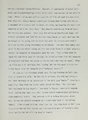
Show 39 analytic functions, ordinary and partial differential equations, invariant theory and non-Euclidean geometry.15 The excellent lectures of Professor_Haskell on non-Euclidean geometry were particularly interesting to‘Eyring. The mathematics he learned at Arizona and Berkeley would be extremely useful in his later career as a theoretical chemist. Perhaps as important as his chemical research, his study of thermodynamics and his mathematical studies was the scientific atmosphere Eyring was exposed to at Berkeley. He wrote of this extraordinary environment: At Berkeley graduate students mingled with outstanding scientists who entertained no doubt that intelligent research was the most important activity in the world. This contagion infested everyone. Individual success in research was accompanied by a shedding of any undue veneration for the embalmed science of the past. Seminars led by Lewis were always exciting, even when the blackboard could be but dimly seen through the blue haze of tobacco smoke exhaled by the addicts. ' Another point was significant. The new graduate student was given keys to all the stockrooms. This was in fact, a presentation of the 'keys to the city.‘ With this handsome gesture went a few words on acceptable conduct. So far as I remember, people responded to this generosity admirably. The chemistry department at Berkeley was, in fact, a society of scholars. Successful research was the badge of honor. Not to try to do research was unthinkable. The research atmospherg provided at Berkeley has probably rarely been equalled. The weekly seminar was the vehicle used to talk about what research was being done at Berkeley and everyone participated, from graduate students to senior faculty members.17 In addition to the seminar, Eyring attended numerous visiting lectures by some of the most prominent scientists in the world. F0" example, after listening to lectures on the new quantum mechanics by John C. Slater and Max Born, Eyring saw great potential in applying the new theory to chemistry. He would later be one of the |