| OCR Text |
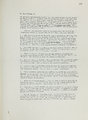
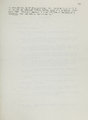
Show 49 calculations were correct, set out to demonstrate them experimentally. He and a post-doctoral friend, Louis S. Kassel, prepared pure quantities of gaseous hydrogen and fluorine and proceeded to mix them at room temperature. The result was as they predicted--no reaction, even after more than thirty minutes of direct contact. Realizing they would have to sweep the dangerous gases out of the chamber they were mixed in, they had arranged for a nitrogen gas line to flush them out. They sought safety behind a large table across the room from the mixture, but had forgotten to run the nitrogen gas line to that point. They de- bated for a few minutes who would go over to the nitrogen tank and turn the valve to flush out the mixture. Eyring finally agreed he would and he proceeded to crawl on his hands and knees across the room toward the nitrogen tank. As soon as he reached up and turned the valve, the mix- ture exploded. "The flask was pulverized, an enclosing towel cut into shreds and a wire-in-glass safety screen cracked in a dozen places. Presumably, this explosion was initiated by sulfur, talc or other cata- lytic material from the fresh rubber tubing from the nitrogen supply."31 Eyring was not hurt, but the violent explosion convinced them not to try the same experiment with liquid hydrogen. Eyring had vindicated his theoretical approach to chemistry but more importantly his work on hydrogen-halogen reactions was significant enough that the American Chemical Society invited him to participate in a spec- ial symposium on "Applications of Quantum Theory to Chemistry" at the Indianapolis meeting of the ACS.32 Professor Hugh S. Taylor, chairman of the Department of Chemistry at Princeton, was present at this March 31, l93l meeting and was so much impressed with Eyring's paper that he invited him on the spot to go to Princeton and present two lectures on. |