| OCR Text |
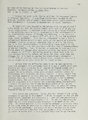
Show 37 fact, Eyring took only one formal course in chemistry, despite his relatively weak chemistry background, and that was thermodynamics. The course was taught by George Ernest Gibson, who later became his thesis advisor. Gibson had come to Berkeley in l9l3, one year after Lewis' arrival. He had received his Ph.D. at the University of Breslau in l9ll and after one year at the University of Edinburgh, his birthplace, he came to California.10 Eyring has said of him: "Professor Gibson was a tremendously competent and exciting individual to work with. person of great imagination and humanly attractive. with great pleasure. He was a I remember him He was a wonderful person and in my opinion, com- parable in intellect with Professor Lewis but less dedicated to getting things done. He lived in a happy world. He enjoyed life."H The rest of Eyring's chemistry studies at Berkeley were in the laboratory. During his first semester, he began to work with Professor Randall on ion activity of various electrolytes using lowered freezing points of solutions. Unfortunately, the equipment necessary for the study was being used by Dr. Albert Vanselow. As a result of the delay, Eyring decided to do research in radioactivity instead of electrolytic chemistry. He then began working with Professor Gibson on the bombard- ment of hydrogen gas at low pressure using an ll,000,000 volt Tesla coil. After numerous unsuccessful experiments, but useful experience, they turned to the stopping power and ionization of various gases which they bombarded with alpha particles from a polonium source. It was from this work that Eyring received his Doctor of Philosophy degree in July l927.12 The results of this investigation were published later in l927 in the Physical Review.13 This was to be the first of numerous scien- tific papers by Eyring and his associates. Eyring's work in radio- |