| OCR Text |
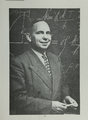
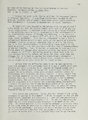
Show l44 10% of them and is listed as the only author or first author on only 25% of them. The other 75% of his papers list a student or colleague as first author. Eyring always gave credit to those who worked on a problem no matter how small a contribution they made. Even though he was re- sponsible in many cases for the key results of the paper, his major concern was not to build his own reputation, but rather to help his students and to further their understanding of science. his students, too. That concern went beyond It was not uncommon for Eyring to stop in the middle of his work to help someone in distress. H. J. White, Jr. recalls Eyring's concern when a guest got stuck on the unpaved road leading to the Textile Institute: "Two or three times a week the call would go out that another motorist was in need of aid. Although Henry, in his posi- tion as Director of Research, could have ignored this problem, he was, in fact, one of the more enthusiastic members of the rescue brigade. More than one distinguished foreign scientist stood on the sidelines and thought his own thoughts about the idiosyncrasies of American chemists while Henry, along with Rocky, the caretaker, and a gaggle of graduate students, shoveled mud, emplaced boards strategically, shouted instructions to the driver, and heaved in unison on bumper, fender, and door post."38 On another occasion, one of his students recalls: thoughtfulness was not confined to professionals. "His I recall one after- noon when he took nearly an hour out from his busy schedule to instruct a secretary in the mysteries of shifting gears in her new Volkswagen."39 Perhaps the most remarkable thing abOut Eyring is his ability to solve problems. For him, there is no problem too difficult to tackle or a question that cannot be answered. That talent rubbed off too, for his .students felt even after they had left his tutelege, "an Eyring man can |