| OCR Text |
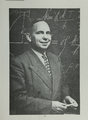
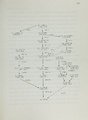
Show 200 Pierre-Joseph Macquer (l7l8 - l784) As far as I am able to discover, if we look for a latest common ancestor of the majority of research chemists working today, a good candidate is Macquer. Certainly almost all physical chemists can be traced back to him, and the same is true of most inorganic chemists. Nith organic chemists the situation is not so straightforward. Some of them do indeed descend from Macquer via_de Fourcroy, Vauquelin F. Stromeyer (l776-l836) and Robert Bunsen (18ll-l899). there seems to be no connection with Macquer. But with others Most of these seem to be descended from J. J. Berzelius (l779-l848) who had no teacher and who therefore, like Faraday and one or two other great scientists, is an example of spontaneous generation. Although not of great scientific fame, Macquer exerted an important influence in his time besides being the ancestor of so many chemists. He was born in Paris, and there has been some controversy about his biological ancestry. According to the French mathematician and his- torian M. J. A. N. Condorcet (l743-l79i), Macquer was the descendent of a Scottish family whose names were originally McKer, and who had taken refuge in France as a result of their devotion to the Catholic faith and the Stewart cause. Douglas McKie however, doubts that Macquer could be a corruption of McKer, and points out that the McKer family were not Stewart supporters. He suggests instead that Macquer is a corruption of Maguire, the family name of the Barons of Enniskillen, some of whom had suffered for their support of the Stewarts. It seems then that Macquer was of Irish rather than Scottish ancestry. Macquer's fame as a chemist would have been much greater if he had abandoned the phlogiston theory, as did his contemporary Lavoisier |