| OCR Text |
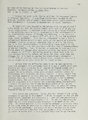
Show 62 linear expansion of the liquid lattice. was recognized immediately. The significance of this paper Professor Nelson S. Taylor of the department of ceramics at Pennsylvania State College wrote Eyring: "I have just seen yOur recent paper J. Chem Phys. on 'Viscosity, plasticity and diffusion' and I want to tell you that I think it is the work of a genius. I'm not kidding you either."17 This idea of fluidized vacancies in liquids led Eyring and associates in the next thirty years to a detailed theory of the liquid state.18 Eyring continued to break new ground, some unrelated to rate processes and liquid theory. In l937, he turned his attention to the physi- cal phenomena of optical rotation. Using quantum mechanics, E. U. Condon, William Alter, and Erying published results of theoretical work on one electron optical rotary power.19 Before this time, physical- chemical literature had stated that optical rotation occurred only with systems of coupled electronic oscillators. In l896 Paul Drude had pro- posed a one-electron theory, but influential physicists like Max Born and Werner Kuhn had discovered errors in his model and explained optical activity with coupled oscillators. years or more. Their model had prevailed for twenty The work of Condon, Alter and Eyring showed that it was theoretically possible for one electron moving in a potential field to produce optical rotation. Eyring, with his collaborators, developed these ideas on optical rotation at Princeton, but later the problem occupied much of his research efforts. Eyring's research at Princeton exhibited an all embracing desire to understand chemical and physical phenomena regardless of the current textbook theories. To him all theories, including his own, are subject to scrutiny. Following the extensive publicity in l933 and before, Eyring was |