| OCR Text |
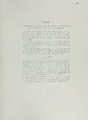
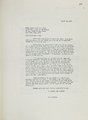
Show l37 science to laymen throughout his presidency to allay their fears and to provide a better understanding of the role of science in society. Eyring's achievements and expertise were also recognized by the United States government, for in 1962 he was appointed to the National Science Board by President John F. Kennedy. As a member of this impor- tant board, he shared in the responsibility of governing and advising the National Science Foundation, the agency of the federal government responsible for stimulating interest and research in science.22 served on the board for one six year term. He In l959, the eighty-sixth Congress established a National Medal of Science to be awarded by the President to individuals deserving of special recognition by reason of their outstanding contributions to knowledge in the physical, biological, mathematical or engineering sciences.23 When President A. Ray Olpin at the University of Utah was invited to recommend candidates for the award, he immediately gathered material together, and with it submitted a letter of endorsement to the President's Committee on the National Medal of Science for Eyring.24 In late December l966, the White House announced that Eyring had been selected to receive the highest honor that the President of the United States can bestow on a scientist. President Lyndon B. Johnson presented the medal in special ceremonies at the White House in Washington, D.C. on February 7, l967. distinguished honor read: The citation for this "The National Medal of Science is awarded by the President of the United States of America to Henry Eyring for contributions to our understanding of the structure and properties of matter, especially for his creation of Absolute Rate Theory, one of the sharpest tools in the study of rates of chemical reactions."25 the awards ceremony for Eyring and ten other scientists, a brief Following |