| OCR Text |
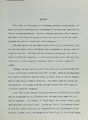
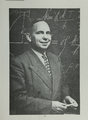
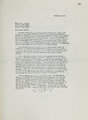
Show l32 Eyring's achievements were further recognized by his colleagues in the American Chemical Society during and in the years following his ACS presidency. In early l963, the California Section presented Eyring with their highest honor, the G. N. Lewis Award. In l968, the Chicago Section presented him the J. Millard Gibbs Medal and he was featured in the June 3, 1968 Chemical and Engineering News. As part of their cover story on Eyring, the editor asked him for his views on the current student unrest. Though such material is not the usual fare for such a publication, Eyring responded positively and a short, four paragraph statement on the issue was published along with the news of his receiving the Gibbs Award. Eyring's statement aroused considerable controversy and he received many letters, some critical and some in agreement. ville, Tennessee wrote: One educator from Nash- ‘ "I was considerably dismayed by the unfeeling biased quotation.in C & E News (June 3, p. 96). I refer specifically to the stereotyped generalization about the 'something-for-nothing' screaming minorities. . . I categorize this as another example of white racism."1O From Stanford, California another educator wrote: "I must say I thor- oughly agree with your statement to C & E News, June 3, l968 p. 96. Let us hope that your point of view will be expressed by more university faculties in the future."H This short statement by Eyring produced per- haps-the most serious criticism of anything he has written in his life, but he paid little attention to it and was blissfully unaware of the controversy it created. Later in l968, Eyring received the Madison Marshall Award from the Northern Alabama Section, and the next year, the Puget Sound and Oregon Sections presented him with their most distinguished honor, the Linus Pauling Award, for his "contributions to the field of kinetics and the |