| OCR Text |
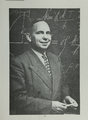
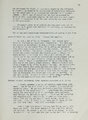
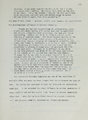
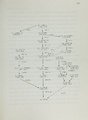
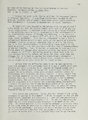
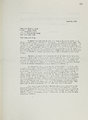
Show 198 Henry Eyring (b. l90l) Henry Eyring is well known for his many contributions to physical chemistry, particularly for his theoretical work on the mechanisms of chemical reactions. Perhaps his most pioneering work was his construc- tion, with Michael Polanyi,of the first potential-energy surface for a chemical reaCtion, and his statistical treatment of reaction rates. Eyring's Ph.D. research was done at Berkeley under George Gibson, who had studied at the University of Breslau. Gibson's first research director at Breslau was Richard Abegg, who was killed in l9l0 in a balloon accident, and the physicist Otto Lummer then directed Gibson's work. Lummer had studied under the great physiologist and physicist von Helmholtz, whose research director was the physiologist and anatomist J. P. Muller, who had studied under the anatomist C. A. Rudolphi. Abegg was a student at Berlin under Hofmann who had studied at Giessen under Liebig. Eyring‘s association at Berlin with Michael Polanyi resulted in the development of the first potential-energy surface. ancestry is not very clear cut. Polanyi's scientific He obtained an M.D. degree before the First World War, during which he was a medical officer in the Hungarian army. After the war, having developed an interest in thermodynamics and quantum theory, he worked for a Ph D. degree. For this he had no formal supervision, but received much inspiration from Nernst and from Einstein. This gives us a relationship with Ostwald and also a collateral connection with Arrhenius, because Nernst studied at Nurtzburg with the elec- trochemist Kohlrausch with whom Arrhenius also studied at Nurtzburg. |