| OCR Text |
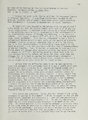
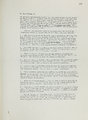
Show 58 water death results in living organisms because of the slowing of life sustaining reactions in the cell.7 At the April, l933, meeting of the American Philosophical Society in Philadelphia, Professors Taylor and Eyring were invited to report on their investigations with heavy water. Upon their arrival at the meetings, Dr. Irving Langmuir, a recent Nobel laureate, cornered Eyring and asked if he would tell him of their work. As Taylor read the formal report to the Society, Langmuir and Eyring walked in a nearby park and discussed Princeton's work on heavy water. Eyring was pleased that Langmuir would show such a keen interest in the work at Princeton. tist. It was a memorable experience for the young scien- Eyring's earlier work provided the theoretical foundations for the reaction rate theory of isotopes, particularly heavy water.8 In the summer of l934, Eyring took his family west in a Model A Ford to visit their families. Later that summer he was to present a paper on the fundamentals of reaction kinetics at the American Chemical Society meeting in Cleveland. But the paper was not presented because the Eyrings had a serious automobile accident on their return trip in early September. Mrs. Ira R. Smith was headed west on U.S. road 6 near South Bend, Indiana, when she noticed a wasp fly into her car. While trying to chase it out, she lost control of her vehicle and crashed head on into Eyring's car. Eyring's right leg and knee cap were frac- tured and the ligaments torn off, his head shattered the front windshield, and his hand broke the steering wheel upon impact. Mrs. Eyring was badly bruised, his sister Rose, who was on her way east to attend school, suffered several broken ribs and a broken pelvis. His youngest son, Henry Bennion, sustained a broken leg, and the oldest son, Edward Marcus, who was asleep, escaped injury. Mrs. Smith and a daughter also |