| OCR Text |
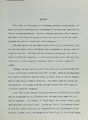
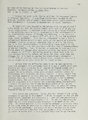
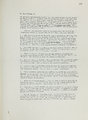
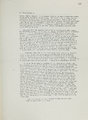
Show T33 detailed nature of interactions between reaction molecules."12 In l974, he was honored by the Northeast Section and awarded their highest honor, the Theodore William Richards Award. Besides the awards of several sections of the ACS, Eyring was the recipient of three of the American Chemical Society's major awards: The Peter Debeye Award in Physical Chemistry, the Irving Langmuir Award in Chemical Physics, and the Society's highest award, The Priestley Medal. Eyring received the Debeye Award in 1964 at the April annual meeting of the Society held in Denver, Colorado.13 The award, established in l960 and sponsored by the Humble Oil Company, consisted of a $2,000 honorarium and a scroll citing Eyring for the important contributions of absolute rate theory in the development of modern chemistry. Debeye, one of the greatest physical chemists of this century and the 1936 Nobel laureate in chemistry, had worked with Eyring on several occasions, the most notable being on the Welch Foundation Scientific Advisory Board, and Eyring was greatly honored to receive the award named in honor of his good friend and colleague. In l967, Eyring was selected by the awards committee of the Society to receive the 1968 Irving Langmuir Award. The award, established in l964 and sponsored by the General Electric Foundation, for whom Langmuir worked, carried a $5,000 honorarium and a citation scroll. The scroll lauded Eyring for his "internationally recognized contributions to physical chemistry in the fields of radioactivity, molecular biology, optical rotation, the theory of reaction rates and the theory of liquids."14 The award, presented only in even numbered years, is for out- standing work in chemistry and physics within the ten years preceding the year in which it is made, indicating the deep respect the world of |