| OCR Text |
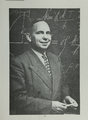
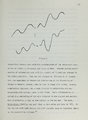
Show 7l Spying, however, was not Eyring's idea of a legitimate war effort and besides, he wanted to stay at Princeton. Another topic he felt strongly about was the insidiously evil nature of Communism. ways, Communism was even worse than Nazism. To Eyring, in some The doctrines expounded by, Hitler were easily recognized as evil but on the surface the doctrines of Stalin appeared to be for the good of all; yet, both tyrants killed millions who did not conform. For Eyring it is not what one says that's important but rather, what one does that counts, a philosophy he has followed throughout his life.46 Perhaps the most significant application of the absolute rate theory outside of chemistry came as a result of Eyring's war consulting. In early l942, he had been asked to consult with Professor Newton Harvey, chairman of the biology department at Princeton, on the problem of shock brought on by broken bones. As they were meeting to discuss the problem, Professor Frank Johnson came into the room to see Dr. Harvey. Johnson, Brown and Marsland had been studying bioluminescent bacteria, the field in which Harvey was preeminent. In particular they were working on the effects of temperature and especially pressure on these interesting light producing organisms. Harvey immediately changed the subject they were discussing to ask Eyring a question about Johnson's research. They ex- plained to Eyring that bioluminescence is absent at cold temperatures, becomes maximal at about 20°C, then drops to a very low value at blood temperature, due most likely to inactivation of the enzyme at the high temperature. What puzzled them was why luminescent bacteria subjected to high pressures became less luminescent in the low temperature ranges and became more luminescent in the high temperature ranges. Eyring immediately saw the answer in his work on reaction kinetics and explained |