| OCR Text |
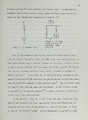
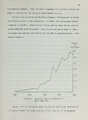
Show llO As a result of this visit, Eyring became acquainted with Dr. Bernard J. Rigby of Australia's Commonwealth Scientific and Industrial Research Organization. Rigby later came to study with Eyring at Utah, and in collaboration with Dr. John D. Spikes, Department of Biology at Utah, and Nishio Hirai, a graduate student, they investigated the mechanical properties of rat tail tendons.60 Stretching rat tails, at first glance, does not seem like the kind of work a respectable physical chemist would be doing, but collagen of rats is, chemically, quite similar to that of other mammals including human beings. A study of the mechanical proper- ties of rat tails then gives insight into the stresses on human tendons, ligaments, valves and the like. The interesting work of the investiga- tors named above revealed that if extensions not exceeding four percent are made, rat collagen relaxes to its original length and with repeated small extensions and partial relaxations, extensions up to thirty-five percent can be made and the collagen will still relax to its original length. When temperature effects were considered, it was found in the O0 to 37°C range that temperature did not affect the mechanical properties of tendon, but if temperatures exceeded body temperature (37°C), prolonged stress results in the non-restoration of stretched collagen. This has important implications in the effects of such diseases as rheumatic and bacterial endocarditis where prolonged fever can affect the heart valves permanently in an adverse way. Also, for animals which are active at low temperatures, the results of Eyring's investigations have important biological implications, for stress on tendons will have little effect even at temperatures near 0°C. The paper also suggests that an investigation into the mechanical properties of mammalian skin and other connective tissue would be important in understanding the |