| OCR Text |
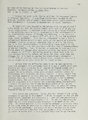
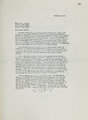
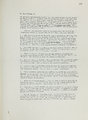
Show 67 The book received very favorable and enthusiastic reviews. Eyring's first Ph.D. advisor at Berkeley, Professor Merle Randall, wrote in re- view: This (is a) most interesting treatise on a timely subject . The reviewer likes the idea of the treatment from a single viewpoint, and although there are those who will not agree with Eyring's viewpoint, here is a homogenous treatment which students of reaction kinetics and other rate phenomena cannot ignore. The publication of this book does much to focus the attention of scholars upon the problem. The discussion of the technically important viscosity, diffusion, and electro- chemical phenomenon on the basis of theory parallel to that for rates of reaction makes the book especially important for the engineer as well as the theoretical chemist. Professor Robert Livingston at the University of Minnesota wrote Eyring: "A copy of 'Rate Processes' reached me from the publisher a few days ago, ' and I feel indebted to you and your co-authors for having completed the book. If you knew the number of times that I cursed you in the past for not getting out such a book, you would probably be surprised." After pointing out a mistake he continued, "Thanks again for the book and con- gratulations on its fine organization and style. very useful to me."31 It is going to prove. A former graduate student of Eyring's wrote from Akron, Ohio, "Haven't interviewed the street cleaners, but everybody else is talking about your book."32 The book was the first major publication of Eyring's to present his absolute rate theory in a way that could be understood by the average worker in physical chemistry, since most of his previous papers on absolute rate theory were written for the specialist in theoretical physical chemistry. It also presented the broad scope of rate theory application in areas besides chemistry. For advocates of the importance of activa- tion energy in reactions it became the bible of chemical kinetics and largely replaced earlier theories which stressed the importance of |