| OCR Text |
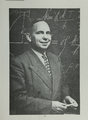
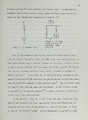
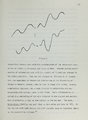
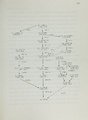
Show 176 to visualize a world with positive electrons rotating about negative nuclei. The result is there are four possible evolutionary worlds: 1- type and positive nuclei (as our world is), l-type and negative nuclei, d-type and positive nuclei, or d-type and negative nuclei.44 For Eyring, it was not how this earth was created nor how life was placed on it that mattered. The gospel of Jesus Christ was true and God had already cre- ated this world and life on it the way he did it and that could not be changed. "The Critical Complex Theory of Biogenesis" explains only how it might have happened. During the decade of the 1950's, Eyring had clearly established himself as an important authority, at least from the Mormon point of view, on the subject of science and religion. He had carefully avoided being engulfed in a controversy that could have ruined his reputation. Many had encouraged him to take a more rigid stance, but his philosophy was that the gospel was the truth, and consequently, both science and religion could provide answers. The result was that he was cited by the Church during the next decade as a worthy example of how one can achieve academically and still be faithful. As early as l96l, he was featured in a Church sponsored film, "Search For Truth." The basic message of the Brigham Young University produced film was precisely what Eyring had advocated for his entire scientific life, that the principles of true science and true religion are in complete accord. The film, directed to strengthening the youth of the Church, contained scenes from Eyring's early life when he left for the University in l9l9 to his search for truth in the six worlds of today. Those worlds were the world in which we live, the biological world, the chemical world, the astronomical world, the nuclear world and the spiritual world.45 |