| OCR Text |
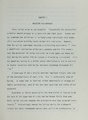
Show 43 equation for the specific reaction rate K' as follows: K'=Ae'E/RT; where A is a constant, E is the difference in energy between active and inert molecules, R is the Boltzmann gas constant and T is the temperature in degrees Kelvin.23 The Arrhenius equation works remarkably well for many chemical and biological reactions where the reaction rate had been measured experimentally. Following his work, interest in the study of chemical kinetics steadily declined. The principal reason for this lack of interest was that there were no new theoretical developments to suggest avenues of inquiry and experiment. This state of affairs was changed in l9l8 when Jean Perrin in France, M. Trautz in Germany, and William C. McC. Lewis in England put forth the "radiation hypothesis" which hypothesised that decomposing molecules in unimolecular reactions receive their activation energy from radiation from the sides of the container rather than from intermolecular collisions. Though the radiation hypothesis was erroneous it -stimulated a new surge of interest in reaction kinetics. Interestingly enough, Farrington Daniels at Wisconsin and Hugh Taylor at Princeton revealed the flaws in the "radiation hypothesis" with work on the decom- position of nitrogen pentoxide. Eyring's work with Daniels was a con- tinuation of these earlier studies. In l922, Frederick A. Lindemann suggested that collisions provide the activation energy for reacting molecules. During the mid-twenties the collision hypothesis was investigated extensively by N. H. Rodebush, C. w. Hinshelwood, D. K. Rice, H. C. Ramsperger, E. K. Rideal, and L. S. Kassel. The collision hypothesis answered some questions but many impor- 'tant kinetic questions remained.24 Reaction kinetics was particularly appealing to physical chemists in l928 for a new and very important |