| OCR Text |
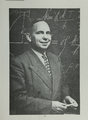
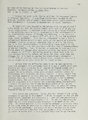
Show l38 reception and a luncheon was held for the medalists and their guests. In Eyring's extensive travels as a consultant and lecturer, he made friends with many university administrators and faculty, who were impressed with his brilliant accomplishments, energetic life-style and pleasing personality. With so many influential friends eager to express gratitude for an invigorating visit, a kind piece of advice, or new insight into a troubling problem, Eyring has had bestowed upon him fifteen honorary degrees.26 Although Eyring accepted each award with distinct pleasure, he particularly prized the awarding of an Honorary Doctorate in Science by Princeton University in l956. The citation not only praises him for his important scientific achievements, but also commends him for his deep religious faith. It reads as follows: Dean of the graduate school and professor of chemistry, University of Utah; sometime member of the Princeton faculty. He is responsible, more than any man, for the fundamental theory of chemical reactions, that is, the "Theory of Absolute Reaction Rates," which is the outgrowth of modern physical research in quantum mechanics and other fields. Applicable to the simplest chemical reactions, it serves equally in the interpretation of the complex behaviors of living systems. Fevers and narcosis, flow in liquids, the slow advance of glaciers, the upthrust of mountains, the properties of charged particles in solution, and the behavior of plastic materials--each of these finds a unifying and illuminating approach in his concepts. Religious Convictions His deeply rooted religious convictions together with 4his extraordinary scientific insight make of him the whole man whom Princeton welcomes with enthusiasm into the ranks of its honorary alumni. While Eyring was at Princeton to receive the honorary degree, he was asked pointedly by Professor Robert N. Pease, chairman of the department of chemistry, if he was ready to come back. Pease felt that Eyring had been living in isolation during the ten years he had been at Utah. the decision to stay at Utah was as firm as the decision to leave But |