| OCR Text |
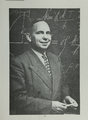
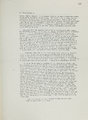
Show 77 It is almost superfluous to say that these l5 years comprise the 15 most significant years in the history of the Department--a history which stretches back to the earliest . years of chemistry departments in the colleges of this country. Princeton may well have been the university where, during these l5 years, the most significant contribution to physical chemistry has been made. Certainly it has been the happiest, pleasantest, most stimulating environment in which to live and work. We count ourselves indeed fortunate that, in justiying the confidence that the Board of Trustees reposed in the Department of Chemistry when they provided for us the Frick Chemical Laboratory, we were able to add to the team of experimental scientists one of the outstanding theoretical chemists of this age, perhaps of any age. Let us glance rapidly back over those years. Henry came to Princeton because he could calculate that hydrogen and fluorine should react slowly no matter what the textbooks said. While we pulled out the experimental evidence on chemisorption, he worked out the basic theory and the significance of the lattice distance in the surface atoms. Emmett, Brunauer, Beeck are indebted to Eyring for that. When heavy hydrogen was separated, Eyring was ready with the significance of zero-point energy both in the separation and the reactions of isotopic species. Extending his studies of reaction kinetics, the absolute rate theory of reaction velocity resulted and the qualitative assumption of an intermediate complex became a quantitative statistical-mechanical formulation of rate processes. Time was taken out to show that reactions produced by o(-particles and ions could yield to quantitative interpretation. Rate theory in chemical processes was extended to all processes occurring in time. Viscosity, diffusion, conduction all fell magically under the spell of kT/h. Holes in liquids became as real as the molecules and were responsible for many properties, responsive to statistical treatment. The organic chemist got due share of help. Optical rotation, directed substitution, the statistics of long chain molecules. Protein denaturation gained a rational interpretation. Small wonder then that Eyring and Johnson tackled together and successfully the influence of tempera- ture and pressure on bioluminescent systems. It was inevitable, too, that fibers and textiles should come later on the list and be similarly illuminatingly analyzed. Now it's the analytical Chemist's turn with what makes the polarograph work, or how to turn a globule of mercury inside out. One might say that he possesses the Midas touch. Every- thing in scientific research turns to gold when brought to the attention of his fertile brain. But there are none of the evils that beset the original Midas. Why this is so is realized by any and all who come in contact with him. Vigorous exponent of scientific truth and also of unpopular, one might even say lost, causes, he convinced everyone of his own disinterested, |